
CONSCIOUSNESS, INTENT & CHOICE
Tom Campbell’s MBT & Trauma
Why a body-first book includes a consciousness-first framework, and what it adds to questions of intent, choice, and change.
Educational reading, not diagnosis or a trauma-processing exercise.
Why MBT belongs here
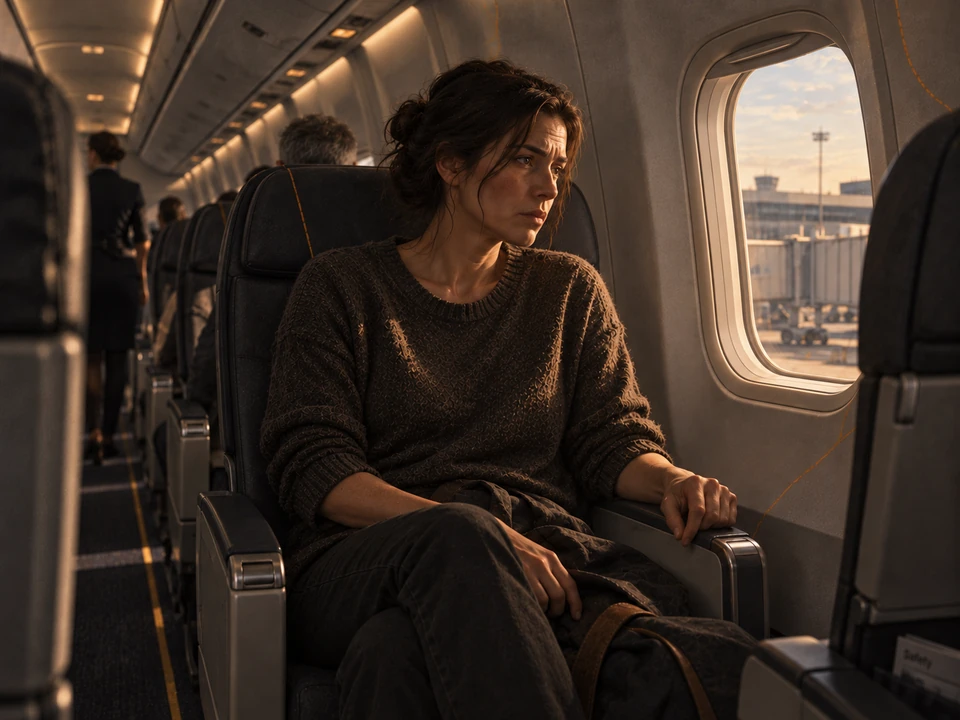
A person remains in an aircraft seat. From the aisle, the action is easy to describe. Its meaning is harder to know.
The Interlude in Edge to Path considers that difference. Staying might involve forcing the body through fear, or enough willingness to continue without fighting every sensation. Leaving might be an urgent escape, or an honest acknowledgment that support is needed. The action alone leaves much of the experience unseen. [1]
Tom Campbell’s My Big TOE, short for My Big Theory of Everything, gives the book a language for asking about that difference. It places consciousness at the center of its account of reality and gives particular weight to intent: the motivation beneath a choice. [1, 2, 4]
That is why MBT is here. It adds a question about the one experiencing and choosing, alongside the book’s accounts of bodily response. Its claims about consciousness remain distinct from neuroscience and clinical evidence. You can examine the question while leaving the framework’s answer open. [1]
When danger is current or uncertain, protection and practical support come first. Read the safety section. [1, 8]
Consciousness first, with the body still present
What MBT proposes
In MBT, consciousness is fundamental. The physical universe is a shared, rule-governed virtual reality experienced by conscious participants. The body and brain belong to that reality. They are the avatar, whose capabilities and limitations constrain the experience and available actions. This is the model’s account of what reality is, rather than a finding established by trauma research. [2, 3]
“Virtual” describes the proposed nature of the world. It does not make pain, injury, or the consequences of an action inconsequential. [2]
How Edge to Path uses it
The book also uses interface to keep the idea close to lived experience: a scar that pulls, breath that catches, a body too exhausted to do what the person planned. Body-first describes where the inquiry begins. Consciousness-first describes MBT’s explanation of what is fundamental. [1]
The distinction requires care. MBT does not propose that a physical brain receives consciousness like a radio signal. In its model, the brain itself belongs to the virtual reality. Interface is useful here as the book’s way of discussing embodied constraint, rather than a claim to have discovered a biological receiver. [1, 2]
The same seat, a different reason
FROM THE INTERLUDE
The movement alone leaves the deeper answer hidden.
Max Theodor, Edge to Path, Interlude. [1]
The Interlude’s comparison of staying and leaving refuses an easy verdict. Endurance can be driven by a need to prove something. Leaving can acknowledge a limit. Either action needs to be understood in its circumstances; neither earns a better spiritual score. [1]
In Campbell’s framework, intent includes the motivation behind a choice. Wanting a particular result and understanding why one wants it are different questions. His account allows intellectual planning and deeper motivation to work together, while placing moral significance on being-level intent. [4]
The being level concerns what a person is within the model, beneath the account they give of themselves. It includes feeling and intuitive understanding, but should not be reduced to an emotion, a bodily impulse, or a clinical definition of the unconscious. A carefully worded intention may leave deeper motives unresolved. [1, 4, 6]
For Edge to Path, this makes intent a question to approach with humility. A steady voice, an open hand, or an apparently considerate act cannot certify what is moving underneath. Even our own explanation may be incomplete. The book keeps intent separate from the conduct another person receives. [1]
That uncertainty still permits clear judgments about actions. A threat can be taken seriously, a boundary respected, and harmful conduct stopped without first solving the person’s inner life. [1]
What choice was within reach?
MBT’s decision space includes the options a person is aware of and has access to at a given time. Its official definition excludes possibilities that exist only in theory. The framework also names bodily capabilities, health, circumstances, and social rules as constraints. [3]
Edge to Path gives that question a trauma-specific application. Could the person hold another possibility in mind? Could they speak, wait, move, or ask for help? Were privacy, transport, money, and somewhere safe to go available? Naming an alternative afterward does not establish how usable it was then. [1]
Independent research supports particular parts of this difficulty. A meta-analysis by Grant Shields and colleagues found that acute stress tended to impair working memory and cognitive flexibility, while its effects on inhibition were more complex. That is evidence about specific functions under stress, rather than a measurement of MBT decision space or consciousness quality. [7]
A distinction between the accounts remains. MBT treats free will as an attribute of consciousness, even under severe constraint. The book does not turn that philosophical position into proof that a usable pause, refusal, or exit was available to a particular person. [1, 3]
Nor does every declined action need a trauma explanation. A person may disagree, prefer another course, or need more information. Their refusal can stand. [1]
Fear, belief, and entropy
These words have particular meanings in MBT. Keeping those meanings visible prevents a philosophical account from becoming a diagnosis.
Fear
Campbell uses fear more broadly than bodily alarm. In MBT, fear directs attention toward self-protection and is expressed through ego, belief, and expectation. The framework associates less fear with wider awareness and decision space. [5]
Belief
In MBT’s usage, belief treats an answer as certain without sufficient facts and can exclude information that challenges it. The book’s related phrase fear-written belief describes an operating assumption shaped around threat. That application belongs to Edge to Path, rather than to an established MBT mechanism of PTSD. [1, 5]
Entropy
MBT uses entropy to describe the organization or quality of consciousness, associating lower entropy with less fear and greater care for others. Its official glossary calls entropy a metaphor for the framework. Here it is neither a measure of bodily tension nor a score that can be calculated from symptoms. [5, 6]
Consider an assumption such as “Asking for help gives someone power over me.” It could rule out an offer before the person has examined it. It could also describe a real danger in a particular relationship. Examining the assumption requires looking at the person offering help and the conditions attached. [1]
The book draws a firm boundary: symptoms, calmness, disability, and recovery speed cannot tell us someone’s intent, entropy, or quality of consciousness. Fear is an experience to understand, not evidence that a survivor chose it. [1]
The other person is still there
Consider a couple discussing a weekend visit. One partner has agreed for both of them. “I was trying to help,” they say. The other had wanted to stay home.

Explaining the motive could open a useful conversation. It could also become a demand that the other person agree the conduct was acceptable. The same explanation can serve different purposes, and the person offering it may need time to understand their own. [1, 4]
The distinction becomes practical in what happens next. Does the person ask before making the next arrangement? Can the partner decline? Does an unwelcome answer remain theirs to give?
Those questions concern conduct and consent. They leave being-level intent uncertain while making the effects of an action available for examination. Someone can take responsibility without securing reassurance about the kind of person they are. [1]
The person who was affected may want a different arrangement, distance, or an end to the conversation. Their response is information about their experience and wishes. It is not a verdict on anyone’s consciousness, and they have no duty to supply the response that makes another person’s growth feel complete. [1]
This is a hypothetical example, separate from the book’s case narratives.
Learning through what follows
Campbell describes life as an opportunity for consciousness to develop through choice and feedback. The direction he gives that development is less fear and greater care for others. Love, in this usage, extends beyond affection to compassion and concern for another person’s welfare. [6]
His distinction between intellectual and being-level change is important here. Knowing the explanation, or learning how to appear considerate, does not by itself establish the change MBT describes. [4, 6]
Edge to Path brings the question back to what can be lived. In the conversation above, the next opportunity could be an ordinary plan made together instead of announced on the partner’s behalf. The practical difference lies in whose wishes enter the decision. Over time, the relevant evidence is whether the conduct and its effects change, with due attention to safety and circumstances. That is the book’s concern with consequence, rather than proof of entropy reduction. [1]
A disappointing outcome does not settle the quality of a choice. Another person can disagree, circumstances can change, and a necessary boundary can hurt. Feedback needs interpretation; it is not a reward system that identifies good people by good results. [1]
Learning after harm also leaves the harm unjustified. The book asks what becomes possible without making suffering necessary or requiring a survivor to find a purpose in it. [1]
Where the framework has limits
Official MBT material makes broad links between negative feelings and fear, ego, and belief. This page does not use those links as clinical explanations of every instance of grief, pain, anger, or distress. The book’s distinction between a philosophical interpretation and a symptom’s cause remains essential. [1, 6, 8]
When danger is current or uncertain, protection and outside support take priority. Housing, money, privacy, disability access, and other people’s conduct remain real conditions. An inward change cannot supply a missing resource or make a threat safe. [1, 8]
The book also preserves the freedom to stop, decline touch or disclosure, and choose distance. No claim about love or growth requires forgiveness, reconciliation, or continued contact with someone unsafe. [1]
If reading increases distress, pause and seek appropriate support. New, severe, or otherwise medically concerning physical symptoms need medical assessment rather than an assumed fear explanation. In immediate danger, contact local emergency services. [1]
Questions about MBT and trauma
Do I have to accept MBT to read Edge to Path?
No. The book invites skepticism. You can examine bodily experience, learned expectations, reachable action, and consequences while leaving consciousness primacy unresolved. Disagreement with MBT is not evidence of a hidden fear or a failure to understand the book. [1]
Does trauma affect only the avatar?
That would be too simple. MBT places learning, fear, and change within consciousness as well as describing the constraints of the avatar. The model gives no basis for promising an untouched inner self. A survival pattern can profoundly shape a life without becoming a complete definition of the person. [1, 2, 6]
Is the Observer Campbell’s term?
The Observer, in the particular sense used by Edge to Path, is the book’s MBT-aligned working term. Its Notes and Sources distinguish that use from a verified Campbell definition. The book also distinguishes witnessing from dissociation. A feeling of distance alone cannot establish the kind of awareness it describes. [1]
Is MBT a treatment for PTSD?
MBT is presented here as a consciousness framework, rather than an established PTSD treatment. Edge to Path is educational reading. The National Institute of Mental Health describes psychotherapy, medication, or their combination as PTSD treatments, with care selected around a person’s symptoms and needs. Reading this page is not a substitute for that assessment and support. [1, 8]
Read Edge to Path
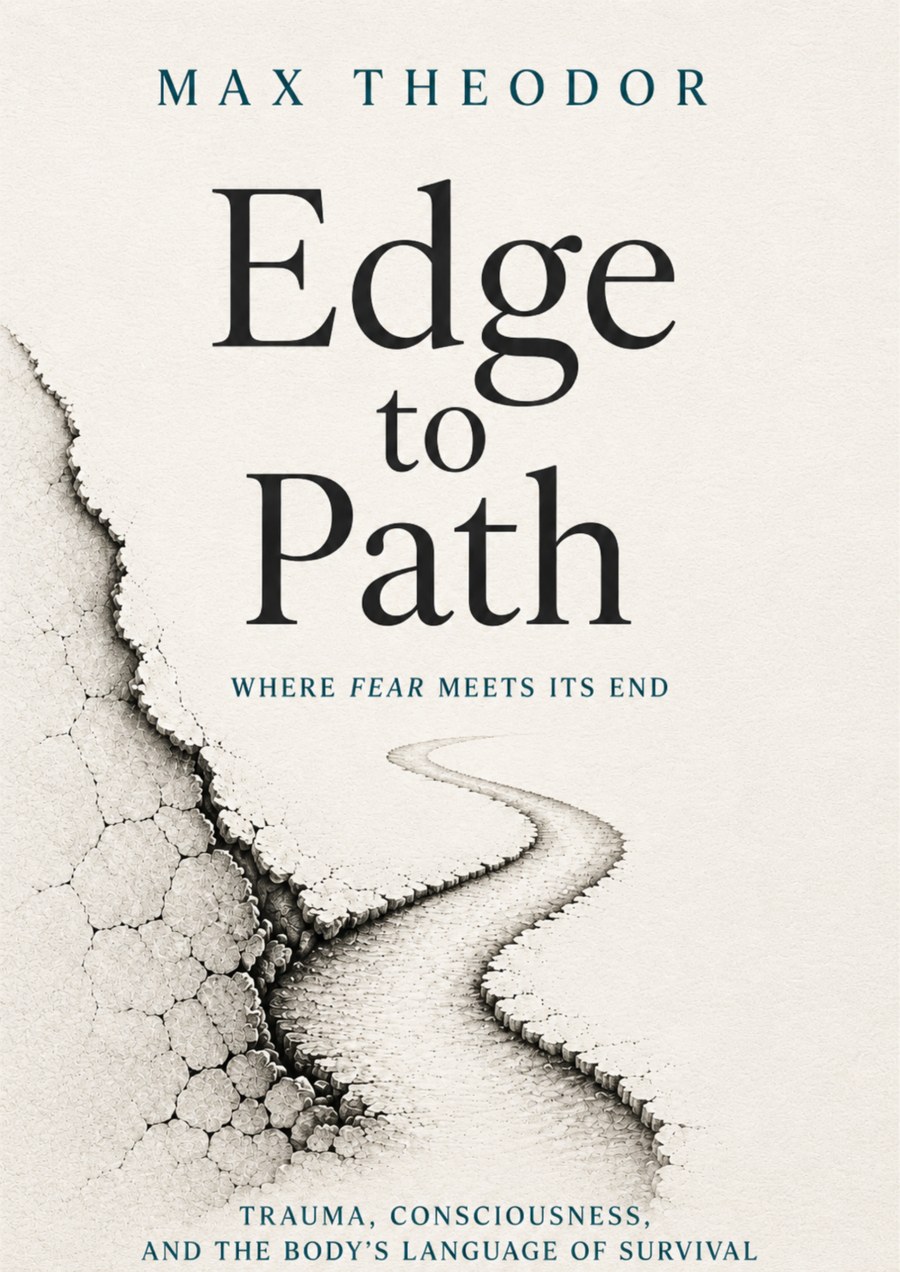
The distinctions on this page take longer to live than to explain. Edge to Path follows them through first-person testimony and recurring case narratives: what fear makes urgent, what a body can reach, and what another person receives. [1]
Neuroscience, somatic practice, and Campbell’s MBT enter those lives with different questions. The book keeps their disagreements visible while asking what helps a response change. [1]
Start with the free chapter to meet the writing. The free Field Guide offers questions for reflection alongside the book.
Ebook · US$12.99
Sources and distinctions
The official MBT sources explain the framework’s own claims. They are not independent confirmation of consciousness primacy. The book supplies its testimony, examples, and synthesis; the stress study and clinical information have separate roles. Neither the artwork nor the hypothetical conversation establishes anyone’s diagnosis, private intent, or treatment outcome.
-
Max Theodor. Edge to Path. 2026. Relevant sections: How to Read This Book; Interlude, especially the staying-and-leaving comparison on printed page 28; “The Last Freedom”; “What Fear Built”; Guidance and Resources; Notes and Sources; Glossary. Explore the book.
-
My Big TOE. “Introduction Part 1: Philosophical Foundations.” Official explanation of consciousness primacy and virtual reality. Used here for MBT’s ontology, rather than evidence that it is established. Read the account.
-
My Big TOE. “Introduction Part 2: Core Elements” and “decision space.” Official explanations of free will, access to options, and constraint. Core Elements · Decision space.
-
My Big TOE. “intent” and “being level.” Official definitions underlying the distinction between a stated goal, motivation, and being-level intent. Intent · Being level.
-
My Big TOE. “fear,” “belief,” and “entropy.” Framework-specific definitions, rather than clinical measures. Fear · Belief · Entropy.
-
My Big TOE. “Introduction Part 3: Consciousness Evolution,” “intellectual level,” and “love.” Sources for the framework’s learning account and the limits discussed above. Consciousness Evolution · Intellectual level · Love.
-
Grant S. Shields, Matthew A. Sazma, and Andrew P. Yonelinas. “The effects of acute stress on core executive functions: A meta-analysis and comparison with cortisol.” Neuroscience & Biobehavioral Reviews. 2016;68:651–668. The abstract supports the bounded summary used here. Read the study record.
-
National Institute of Mental Health. “Post-Traumatic Stress Disorder.” Clinical information about symptoms, treatment, and ongoing trauma. Read the guidance.
Web sources consulted September 17, 2026.