
EXPERIENCE, CONTACT & THE OBSERVER
Dissociation & Dual Awareness
Watching what happens inside you can mean different things. This page explores the difference between feeling far away and remaining in contact with an experience, and where the book’s Observer fits.
Educational reading, not a diagnosis or an invitation to revisit a traumatic event.

When distance can look like control
In “Sophie,” a chapter of Edge to Path, Torres can give a clear account of what happened in combat. The dates come in order. His voice stays level. What he felt during those events is much harder to reach. The telling continues while sensation grows distant. [1]
Torres and his daughter are constructed case figures. Their story gives the book a way to examine a difficult distinction: being able to describe an experience and remaining connected to it are different things. A fluent account leaves much of the person’s experience unseen. [1]
Clinical descriptions make the problem more complicated. Feeling as though you are watching yourself from outside can be part of depersonalization. The word observing, on its own, cannot tell us whether someone feels more connected or more distant. [2]
This page uses connected witnessing for a different relationship to experience: noticing what is happening while enough of the present remains available to participate in it. It is an explanatory phrase used here, rather than a diagnosis or a state someone else can certify by watching you.
You do not need to bring a memory forward to understand that distinction. When danger is current or uncertain, protection and outside support take priority. Read the safety section. [1]
What dissociation can mean
Dissociation covers disruptions in aspects of experience that ordinarily work together, including awareness, memory, identity, and perception. It can involve detachment from yourself or your surroundings; other forms involve gaps in memory or access. These experiences do not all have the same meaning or cause. [2]
Dissociation can occur in response to overwhelming experience. It also needs to be understood in its current circumstances, rather than assumed to reveal a particular trauma history. Two terms are especially relevant to the kind of distance discussed here. [2]
Depersonalization
Your own body, feelings, or actions may seem remote or unfamiliar, as though you are observing yourself from outside. The difficulty concerns your felt connection to yourself. [2]
Derealization
The surroundings may seem dreamlike, flat, or unreal. Familiar people and places can feel strangely distant. The difficulty concerns how the world is experienced. [2]
People experiencing depersonalization or derealization can still know that the feeling of unreality is an experience, rather than a literal change in the world. That knowledge does not make the distress insignificant. An episode also does not, by itself, establish a disorder. Assessment considers persistence, distress, effects on daily life, and other explanations. [2]
These descriptions offer language for a conversation with a qualified professional. Ordinary distraction alone does not establish a dissociative disorder, and a brief description cannot diagnose you or someone beside you. [2]
Contact with the present
Present-time contact concerns the current situation being available to awareness: where you are, what is happening, and what information belongs to this moment. In the book, that contact can return through ordinary details, including the surface beneath a hand or another person’s voice. It need not begin with close attention to an internal sensation. [1]
There is a difference between knowing the address and feeling involved in what is happening there. A person can remain oriented in some ways while feeling detached in others. Being able to name the place is useful information, not a complete answer. [2]
Connected witnessing, as used here, includes more than location. It leaves some contact with the experience as your own, with the situation around you, and with what happens next. Intensity may remain. The aim is not to produce the greatest possible distance from feeling.
Nor does being present make a situation safe. A person may be responding to remembered danger, current danger, or both. The book keeps that question open until the circumstances have been considered. [1]
What dual awareness adds
In the trauma-clinical sense used here, dual awareness describes contact with distressing experience while awareness of the present remains alongside it. Janina Fisher discusses this in her account of Sensorimotor Psychotherapy: a person can observe thoughts, feelings, images, and sensations while distinguishing the past from what is happening now. This is a clinical-model description, not evidence of two separate selves. [3]
Present contact does not require a traumatic memory to be active. Dual awareness names the particular situation in which difficult material and present context can be held together. It involves more than two things appearing at once; their difference has to remain meaningful. [1, 3]
That distinction becomes clearer in Torres’s story.
The present stays
On the couch, Sophie reaches across her father for a juice box. Her movement brings the combat scene into his experience. He can perceive his daughter and the old scene, yet past and present lose their separation. Both carry the force of something happening now. [1]

Later, at the kitchen counter, the activation continues. His daughter’s singing reaches him from nearby. The counter is under his hands; the tile is cold beneath his feet. Those facts begin to be available alongside what the combat memory brings. [1]
At the counter, briefly, the kitchen stayed beside it.
Max Theodor, Edge to Path, “Sophie,” p. 90. [1]
The passage describes a fragile change in contact. His daughter’s voice belongs to the current evening even while the older experience remains powerful. The memory has not been erased, and the story does not make holding a counter a treatment. It illustrates why perceiving two things and being able to distinguish their place in time are different achievements. [1]
The artwork offers a visual echo of that contrast. A posture or an object in reach cannot establish what the person depicted is experiencing.
A different relationship to a thought
A related term is decentering. In a model proposed by Amit Bernstein and colleagues, this includes awareness of experience, less identification with it, and reduced reactivity to thought content. It concerns a shift in perspective, rather than the discovery of a separate self. [4]
Consider the sentence “I am broken.” There is a difference between taking it as a complete description of yourself and noticing it as a painful judgment you are having. That difference does not settle which injuries are real or what help you need. It leaves the judgment open to examination.
This is a useful neighbor of connected witnessing, not another name for everything this page describes. Nor does noticing a judgment guarantee that its influence will disappear. The comparison is explanatory; it is not a claim that the wording above treats trauma. [4]
What the book means by the Observer
Edge to Path uses the Observer as an MBT-aligned term for consciousness witnessing experience without becoming wholly absorbed in it. The book places this beside clinical dual awareness while keeping their meanings distinct. Its Notes and Sources identify this particular use as the author’s working term, rather than a verified definition taken from Tom Campbell. [1]
In Campbell’s My Big TOE, consciousness is fundamental, and the body and brain belong to the physical reality experienced through an avatar. That is an account of what reality is. Clinical descriptions of awareness do not establish that ontology. [1, 5]
Within the book’s framework, practice concerns the conditions under which access to the Observer remains reachable; it does not create the Observer. Access can fail. The concept supplies no guarantee that a pause was available before a reaction. [1]
It also supplies no promise of an untouched self behind injury. The body, the consequences of what happened, and the help a person needs remain real. A survival response can shape a life profoundly without providing its complete definition. [1]
Readers can leave the MBT interpretation open and still use the distinction between disconnection and contact. Accepting an explanation of consciousness is not a condition of being taken seriously.
Support without pressure
Nothing on this page asks you to hold a difficult sensation, retrieve a memory, or keep reading through distress. The book allows attention to stay with the external world or alongside a trusted person. Inward attention is an option, not a later stage everyone must reach. [1]
Meditation and mindfulness practices help some people, but adverse experiences also occur and safety research has limits. Continuing a practice is not automatically the right response when it leaves you feeling worse. [6]
You can pause, change focus, decline touch, or reject an interpretation. Stopping has to change what happens next. A practitioner’s preferred explanation does not override your account or your consent. Persistent disconnection, distress, or disruption of daily life deserves assessment and support fitted to what you are experiencing. [1, 2]
Current or uncertain danger takes priority over inward observation. Privacy, money, accessible transport, and somewhere safe to go may shape the available options. A threatening situation does not become safe because a person feels calmer. [1]
Physical illness, neurological conditions, substances, and medication effects may also need consideration. New, severe, or rapidly changing symptoms, fainting, confusion, or other medically concerning changes need medical assessment rather than an assumed trauma explanation. In immediate danger, contact local emergency services. [1, 2]
What happens when contact returns
Sophie has her own experience of the evening. Her father’s account cannot tell the whole of it. In the book’s scene, she notices the crushed paper plate and watches him carefully. Understanding what happened inside Torres does not remove what she encountered. [1]
The same distinction holds when awareness arrives after a harmful reaction. A clearer explanation can help a person take responsibility, but it cannot substitute for changed conduct. The relevant questions include what was done, what conditions need to change, and what the other person wants now. [1]
The person affected may want support, distance, or no contact. They have no duty to reassure someone about their progress or receive an apology. The book’s account of return keeps that freedom intact. Return can also mean hearing an answer you dislike and allowing it to stand. [1]
Questions about dissociation and awareness
Does feeling detached always mean trauma?
No. Detachment can occur in different circumstances, including other mental-health or medical conditions and substance-related effects. Its presence does not establish a specific history. A qualified assessment considers the experience and its context, rather than asking you to find a hidden event to explain it. [2]
Can I know where I am and still feel detached?
Yes. In depersonalization and derealization, people may retain awareness that their experience of unreality is subjective. Knowing this can coexist with considerable distress. Orientation and felt connection are related questions, not interchangeable tests. [2]
Are dual awareness and dual attention the same?
Usage varies. This page distinguishes the clinical description of experiencing difficult material while retaining present context from the procedure-specific use of dual attention in EMDR. In that setting, attention to a memory is accompanied by an external task or stimulus. The terms overlap, but a task and a relationship to experience are not identical. This explanation gives no instructions for trauma processing. [1, 3, 7]
Does noticing a reaction mean I could have stopped it?
No. Noticing, choosing, and carrying out a different response are separate capacities. Awareness may arrive after the act, and even awareness during an event does not establish that another action was usable then. The book keeps that uncertainty alongside responsibility for conduct and the safety of anyone affected. [1]
Read Edge to Path
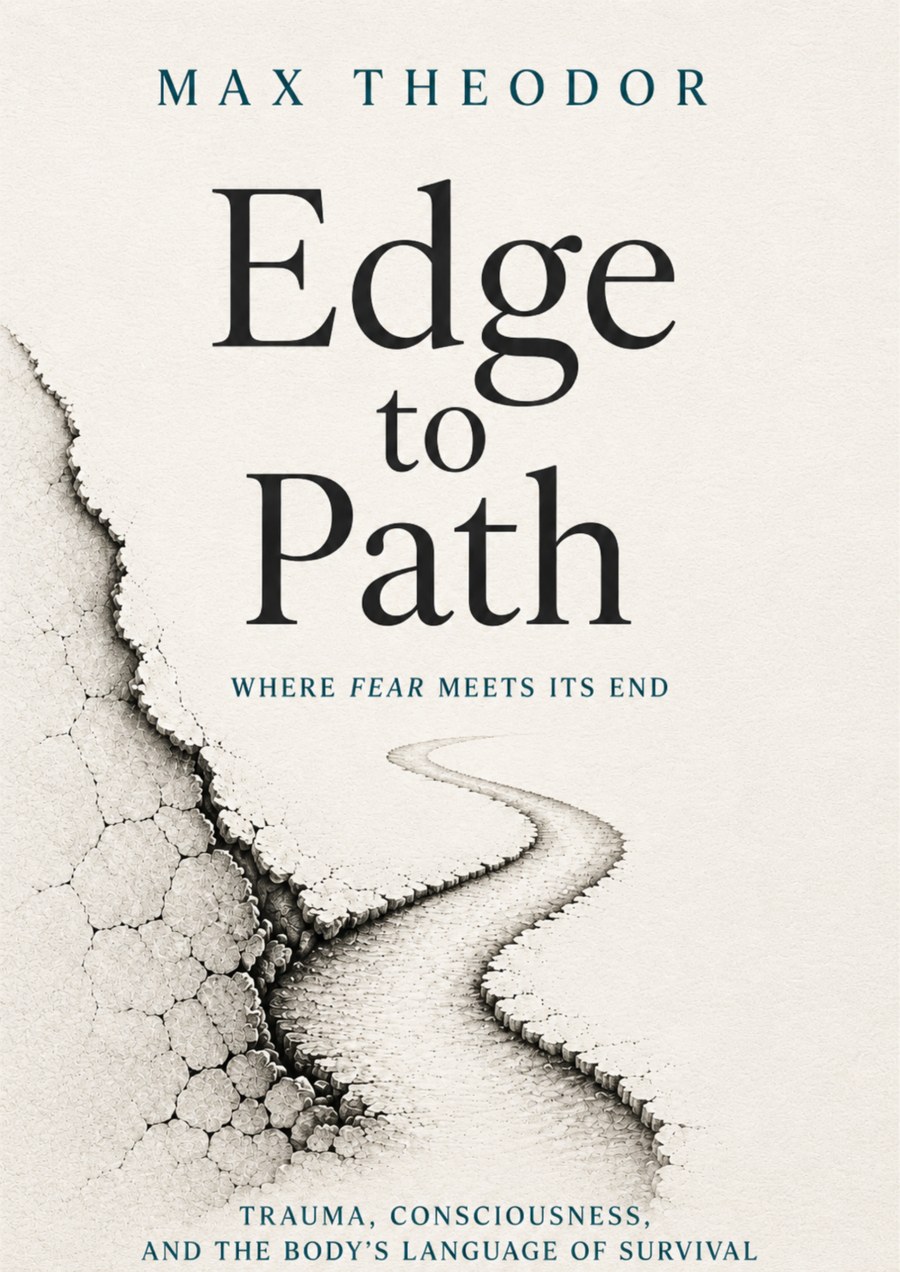
Torres’s account continues beyond the kitchen. Edge to Path follows him and other case figures through the difference between understanding a response and finding another way to meet it. First-person testimony, neuroscience, somatic practice, and Campbell’s MBT bring different questions to those lives. [1]
The book moves from the author’s account of violence to the ordinary evenings that survival can interrupt. Its question is how more of a life becomes available again, with injury and responsibility still in view. [1]
Read the free first chapter to meet the writing. The free Field Guide offers questions for reflection alongside the book; it is not a dissociation assessment or a trauma-processing protocol.
Ebook · US$12.99
Sources and distinctions
Clinical descriptions, therapeutic models, and the book’s interpretation have different roles here. Connected witnessing is explanatory language used on this page, not a diagnostic scale. The Observer is the book’s MBT-aligned term. Neither an illustration nor a visible posture establishes someone’s mental state, safety, or treatment outcome. The two images are not a before-and-after account.
Max Theodor. Edge to Path. 2026. Relevant passages: “Sophie,” printed pp. 85–91; Interlude; “The Last Freedom”; “The Observer Within Reach”; Guidance and Resources; Notes and Sources; Glossary. The quotation is from “Sophie,” p. 90. Torres and Sophie are constructed case figures, not reported treatment participants. The book sometimes uses dual attention more broadly; this page distinguishes its procedure-specific EMDR use from dual awareness. Explore the book.
NHS, MSD Manual Professional, and the VA National Center for PTSD. Clinical descriptions of dissociation, depersonalization, and derealization, including assessment and alternative explanations. The VA account concerns dissociation in PTSD; it is not a description of every detached experience. NHS: Dissociative disorders · MSD: Depersonalization/Derealization Disorder · VA: Dissociative Subtype of PTSD.
Janina Fisher. “Sensorimotor Psychotherapy in the Treatment of Trauma.” Practice Innovations. 2019;4(3):156–165. Used for an attributed clinical account of dual awareness and distinguishing past from present, not as proof of a universal mechanism. Read the author-hosted paper.
Amit Bernstein and colleagues. “Decentering and Related Constructs: A Critical Review and Metacognitive Processes Model.” Perspectives on Psychological Science. 2015;10(5):599–617. The publisher abstract supports the modest conceptual description used here. It does not test this page’s wording or the book’s Observer. Read the study record.
My Big TOE. “Philosophical Foundations” and “consciousness.” Official descriptions of Campbell’s ontology. They explain the framework’s position, rather than independently establish it or supply the book’s particular Observer definition. Philosophical Foundations · Consciousness.
National Center for Complementary and Integrative Health. “Meditation and Mindfulness: Effectiveness and Safety.” Authoritative information on benefits, adverse experiences, and evidence limits. The book’s equal standing for outward, inward, and supported routes is its own synthesis. Read the guidance.
Ramon Landin-Romero and colleagues. “How Does Eye Movement Desensitization and Reprocessing Therapy Work? A Systematic Review on Suggested Mechanisms of Action.” Frontiers in Psychology. 2018;9:1395. Used only to clarify dual attention in EMDR, without adopting a particular mechanism or providing a treatment procedure. Read the paper.
Public sources consulted September 19, 2026.